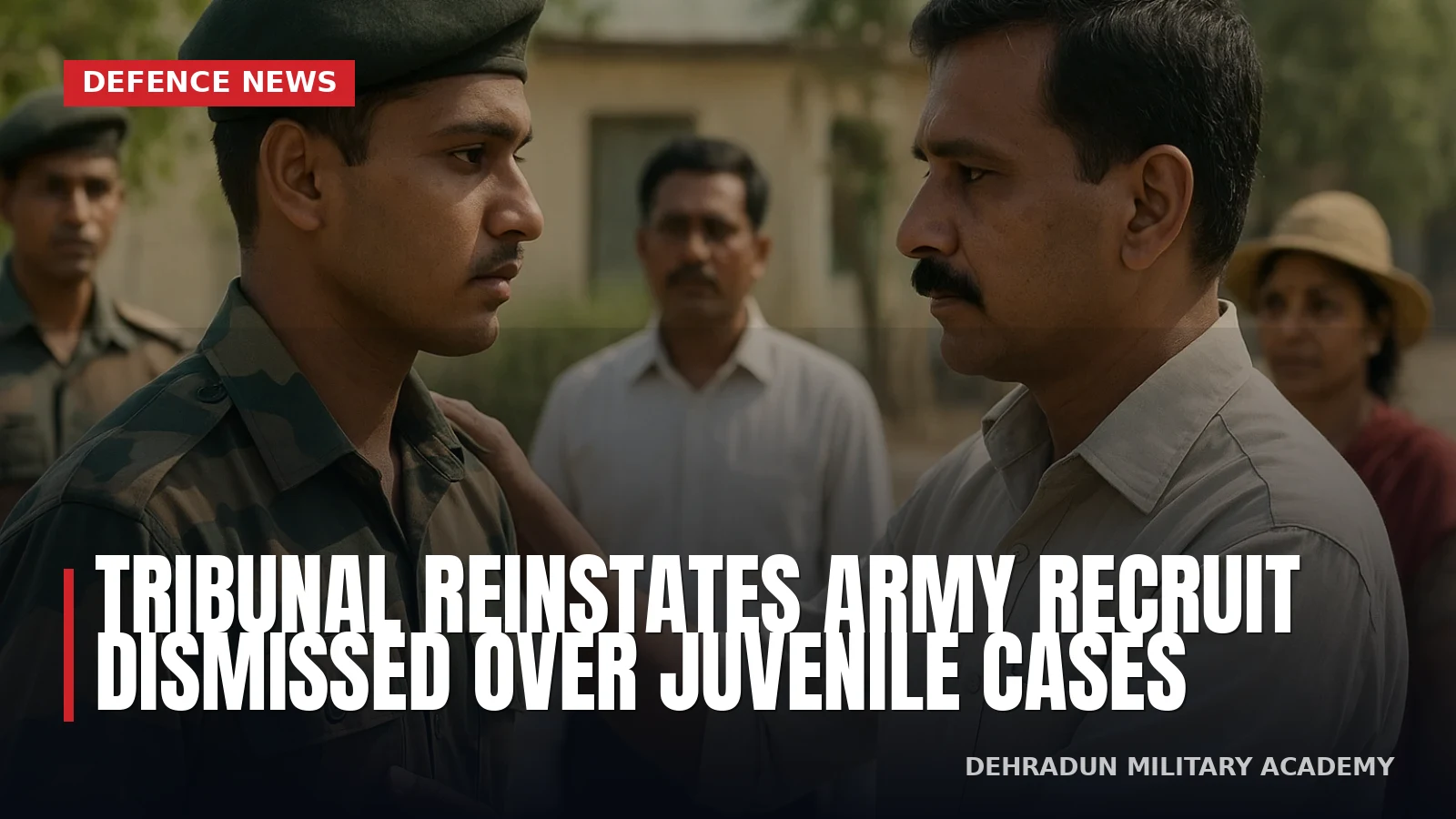
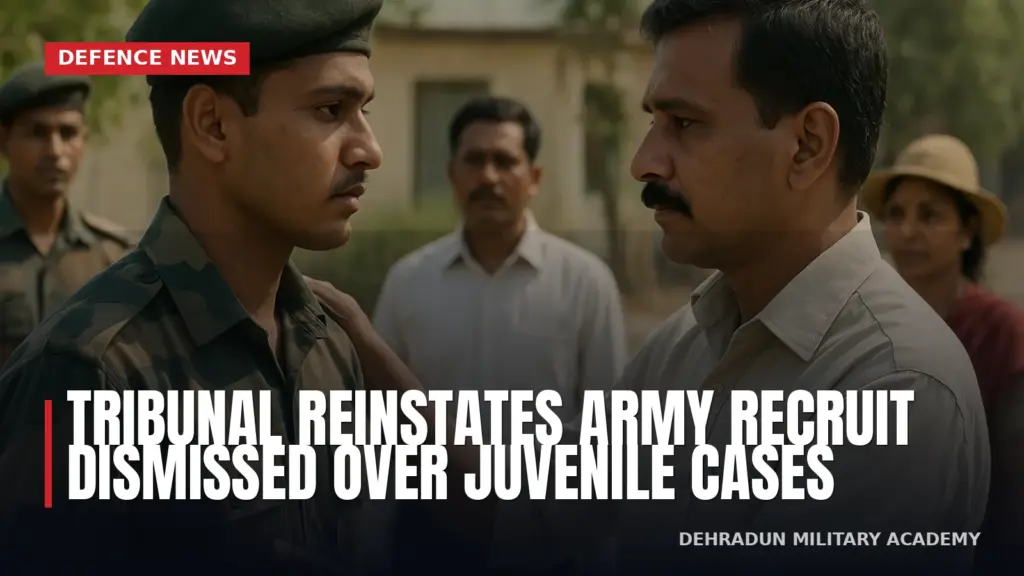
The Armed Forces Tribunal (AFT) has ruled in favor of an Indian Army recruit, Azim, who was dismissed from service for allegedly not disclosing criminal cases from his juvenile years. The tribunal, in its order dated November 2, 2026, overturned the dismissal, citing protections under juvenile justice laws.
Background of the Case
Azim, from Pauri Garhwal in Uttarakhand, became part of the Indian Army’s Parachute Regiment on March 24, 2017, through the Army Recruiting Office in Lansdowne. During recruitment, he declared that he had no arrests or criminal complaints against him. However, character verification later uncovered two past criminal cases.
Details of the Criminal Cases
The first case involved allegations of theft and receiving stolen property, dating back to 2007 when Azim was approximately 15 years old. The second case involved charges of rioting and related offences, which were quashed by the High Court in 2016. Importantly, Azim had not been convicted in these cases.
Dismissal and Appeal
Following the verification report, the Army dismissed Azim on September 5, 2018, for allegedly withholding information about his criminal history. His appeal for reinstatement was denied in 2019, prompting him to seek recourse through the Armed Forces Tribunal.
Tribunal’s Ruling
The tribunal examined the protections under the Juvenile Justice (Care and Protection of Children) Act, 2000. It emphasized that the law aims to prevent lasting disqualifications for offences committed during childhood. The tribunal ruled that Azim’s dismissal was legally unsustainable as the cases did not lead to a conviction, and ordered his reinstatement.
The tribunal instructed that if reinstatement was not feasible due to medical or other service regulations, Azim should be treated as notionally reinstated with financial benefits.
What this means for defence aspirants
This ruling highlights the significance of understanding legal protections under juvenile justice laws, especially for those aspiring to join the armed forces. It underscores that offences committed as juveniles should not automatically disqualify individuals from military service.
At Dehradun Military Academy, we offer guidance and support to help aspirants navigate such complexities in defence recruitment.
Related DMA courses: NDA coaching and admission enquiry.
FAQs
What was the tribunal’s decision regarding Azim’s dismissal?
The tribunal overturned Azim’s dismissal, ruling that his juvenile cases could not disqualify him from military service under juvenile justice protections.
Why was Azim initially dismissed from the Army?
Azim was dismissed for allegedly concealing information about criminal cases from his juvenile years during the recruitment process.
What legal protections were considered in this case?
The tribunal considered protections under the Juvenile Justice (Care and Protection of Children) Act, 2000, which prevent disqualification based on juvenile offences.
Will Azim be reinstated in the Army?
The tribunal ordered his reinstatement, but if not feasible, he should be treated as notionally reinstated with financial benefits.
What impact does this ruling have on future recruits?
This ruling emphasizes that juvenile offences should not automatically lead to disqualification from military service, highlighting the need for awareness of legal rights.
Representative image: Gallant Soldiers of Indian Army by Auwm grenadiers, CC0, via Wikimedia Commons.