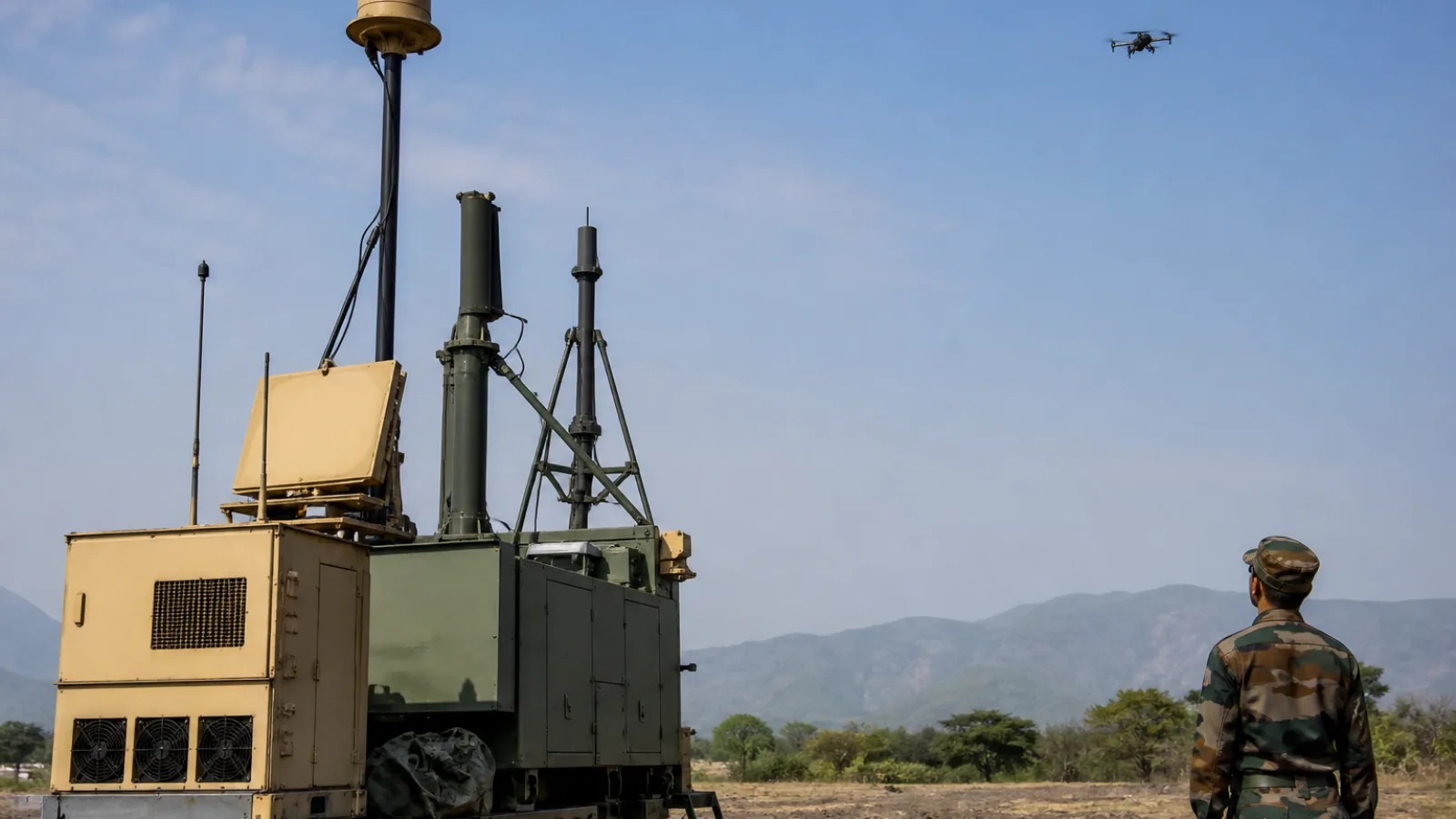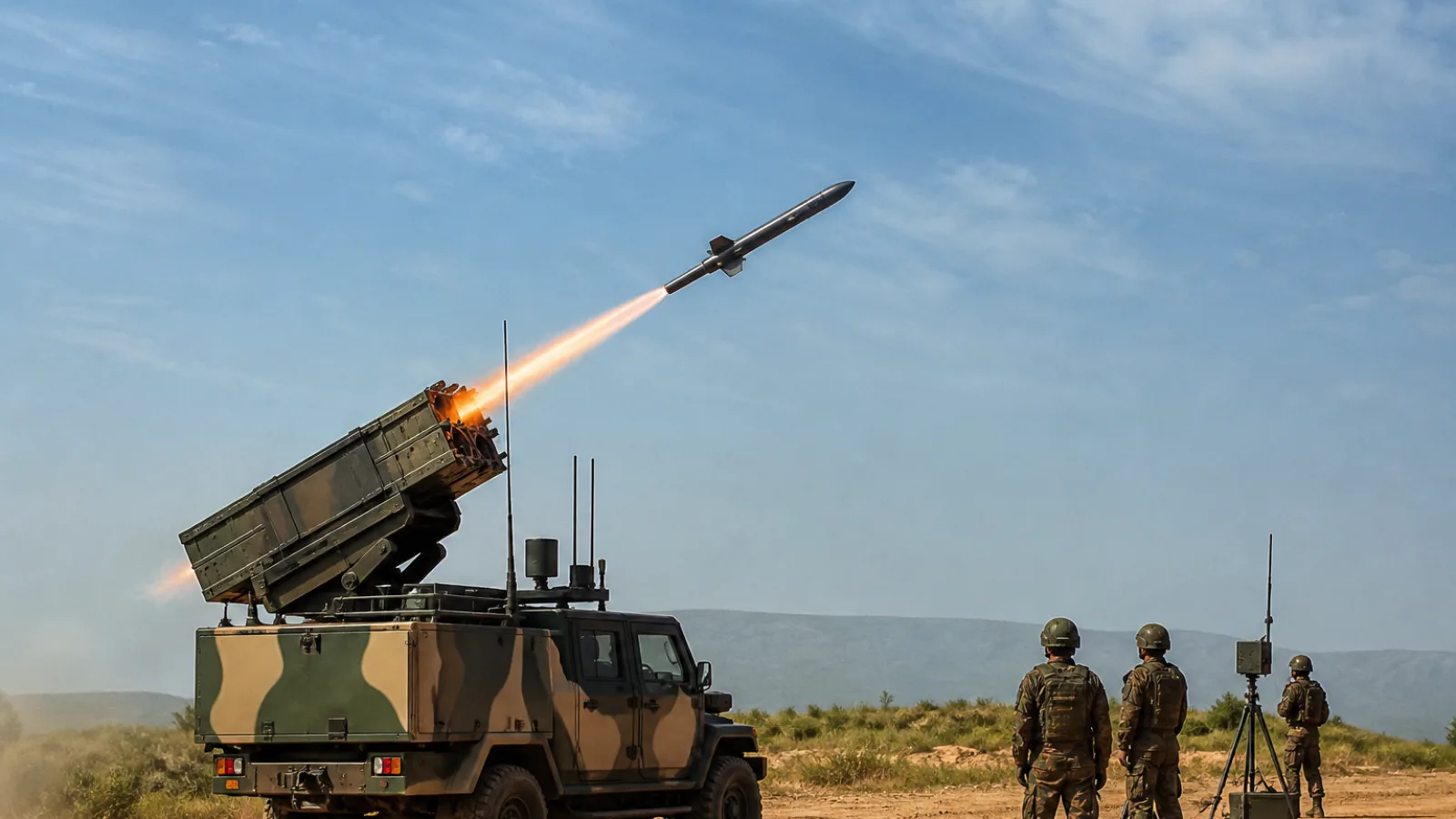
India has successfully conducted a test of the JWALA MK-1 anti-drone micro-missile system at Pokhran, Rajasthan. Developed by IG Defence, this system is recognized as India’s first autonomous Counter-Unmanned Aerial System (UAS) Micro-Missile System. It features an AI-based GRID system, which enables the detection, classification, and engagement of drones within a 5-kilometre range.
Features of JWALA MK-1
The JWALA MK-1 system is notable for its AI-driven capabilities. The GRID system is crucial to its operation, providing advanced target detection and engagement management. This system’s ability to autonomously handle threats represents a significant advancement in India’s defence technology.
Importance of Indigenous Defence Technology
The successful test of the JWALA MK-1 at Pokhran highlights India’s dedication to enhancing its defence capabilities through indigenisation. Developing indigenous technologies like the JWALA MK-1 reduces reliance on foreign systems and bolsters national security.
Testing at Pokhran
Pokhran, known for its defence testing facilities, was selected for the JWALA MK-1 trials. The successful test at this location demonstrates the system’s readiness for deployment and its potential role in safeguarding Indian airspace from drone threats.
Role of AI in Defence Systems
The integration of AI into defence systems such as the JWALA MK-1 marks a significant advancement. AI enhances the system’s ability to quickly and accurately respond to drone threats, providing a robust solution to modern aerial challenges.
What this means for defence aspirants
For those aspiring to careers in defence, understanding the capabilities and technologies of systems like the JWALA MK-1 is crucial. As AI becomes increasingly integrated into defence strategies, aspirants should focus on staying informed about technological advancements and their implications for national security.
At the Dehradun Military Academy, we foster an environment that encourages knowledge of such advancements, preparing students for future roles in defence.
Related DMA courses: admission enquiry.
FAQs
What is the range of the JWALA MK-1 system?
The JWALA MK-1 system has an operational range of 5 kilometres, allowing it to detect and engage drones within this distance.
Where was the JWALA MK-1 tested?
The system was successfully tested at Pokhran, Rajasthan, a site known for defence trials.
What powers the JWALA MK-1 system?
The JWALA MK-1 is powered by an AI-based GRID system, enabling autonomous detection and engagement of drone threats.
Why is indigenisation important in defence?
Indigenisation reduces reliance on foreign technology, enhances national security, and supports the development of domestic defence capabilities.
How does AI benefit defence systems?
AI improves the speed and accuracy of threat detection and response, making defence systems more effective against modern challenges.